

Point 10: the statutes of San Vito and the province of Ravignana
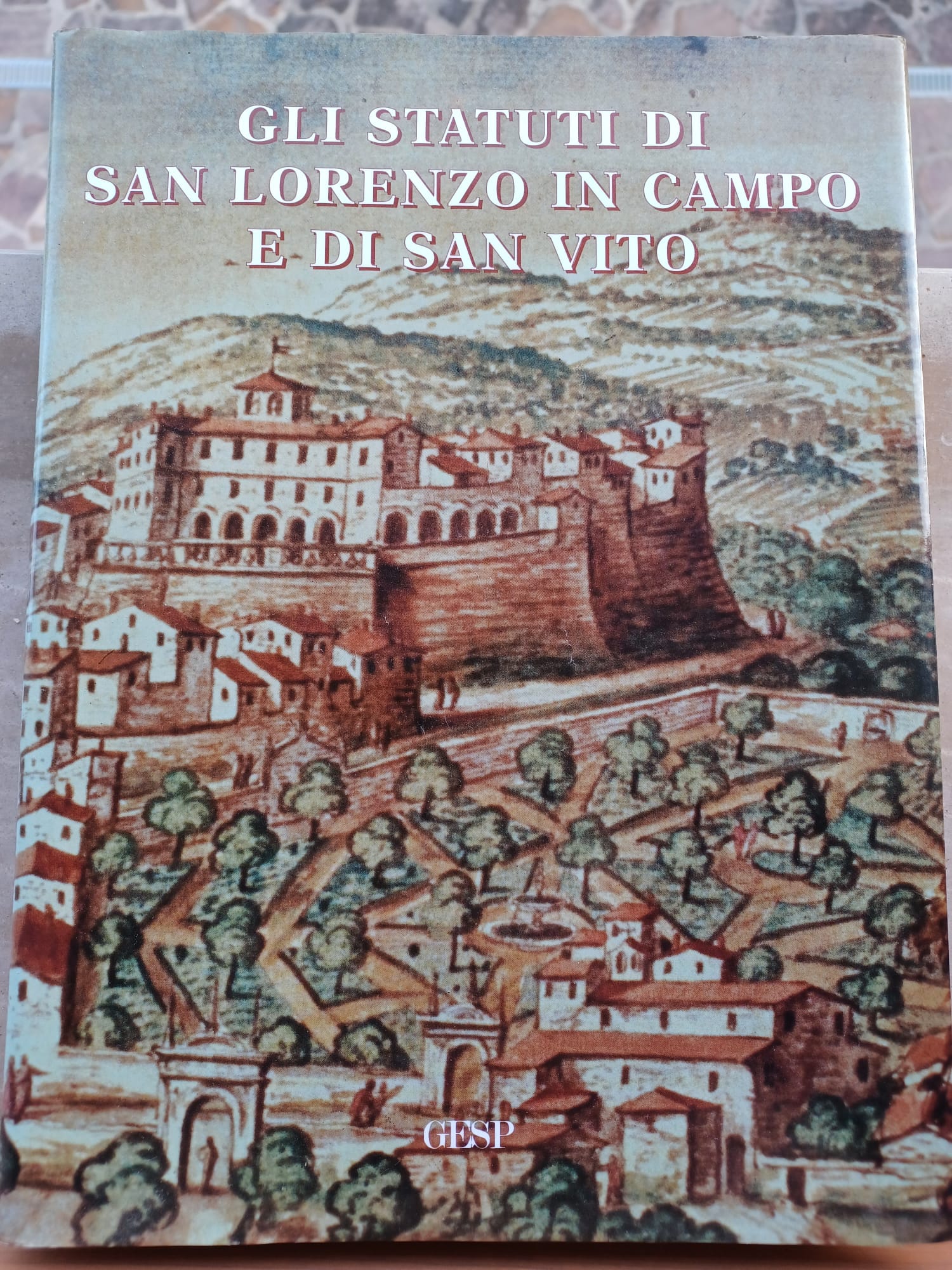
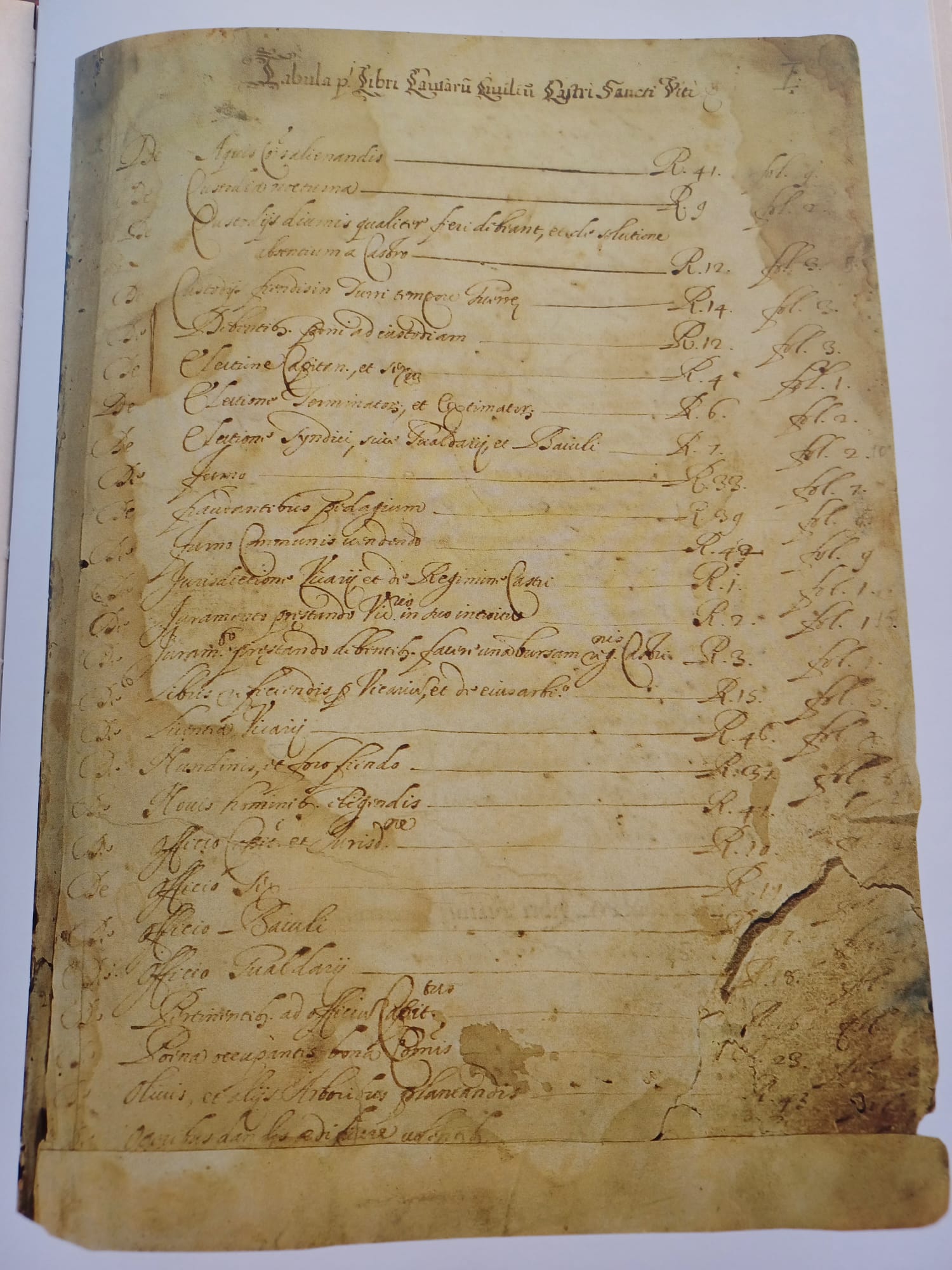
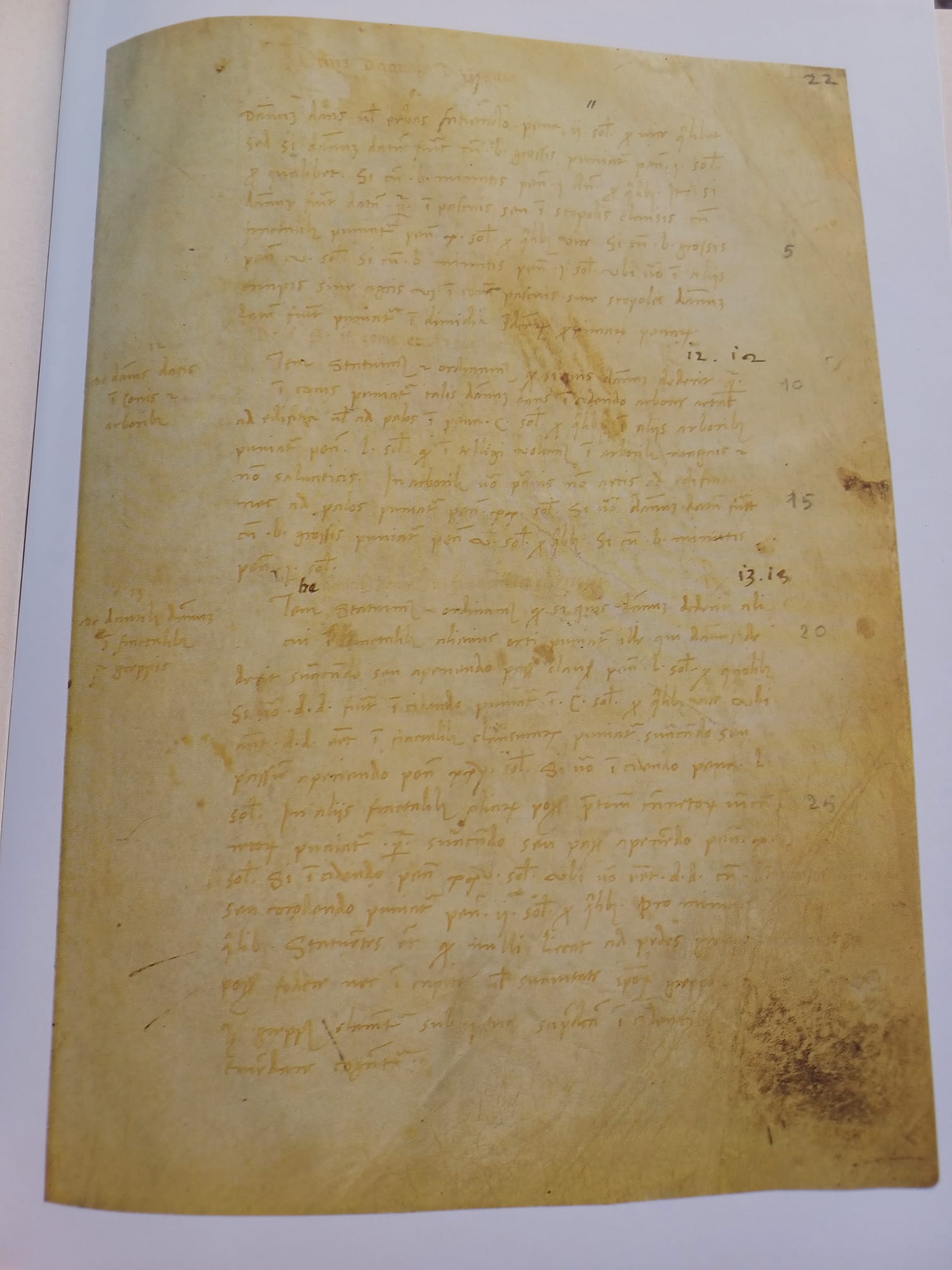
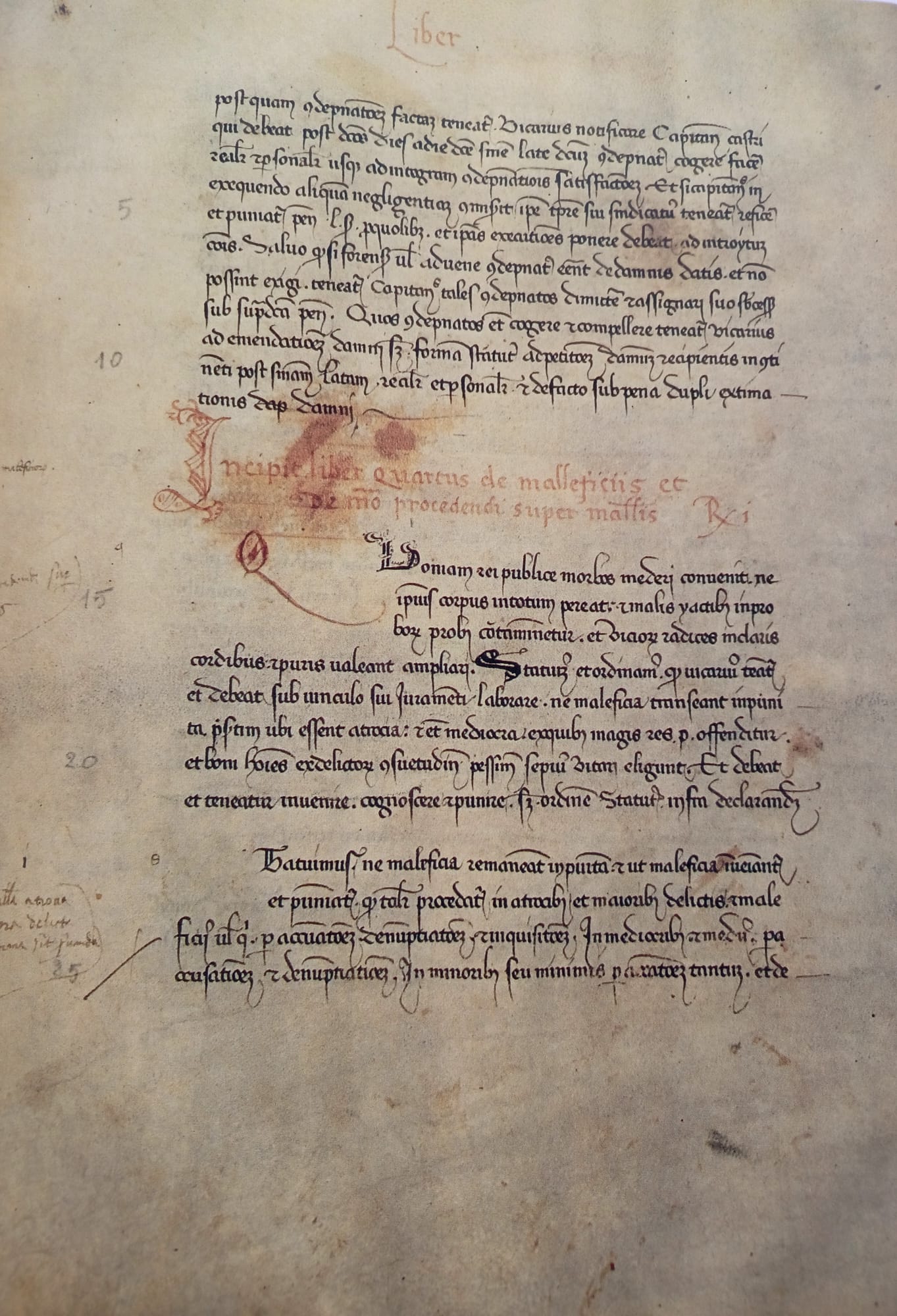
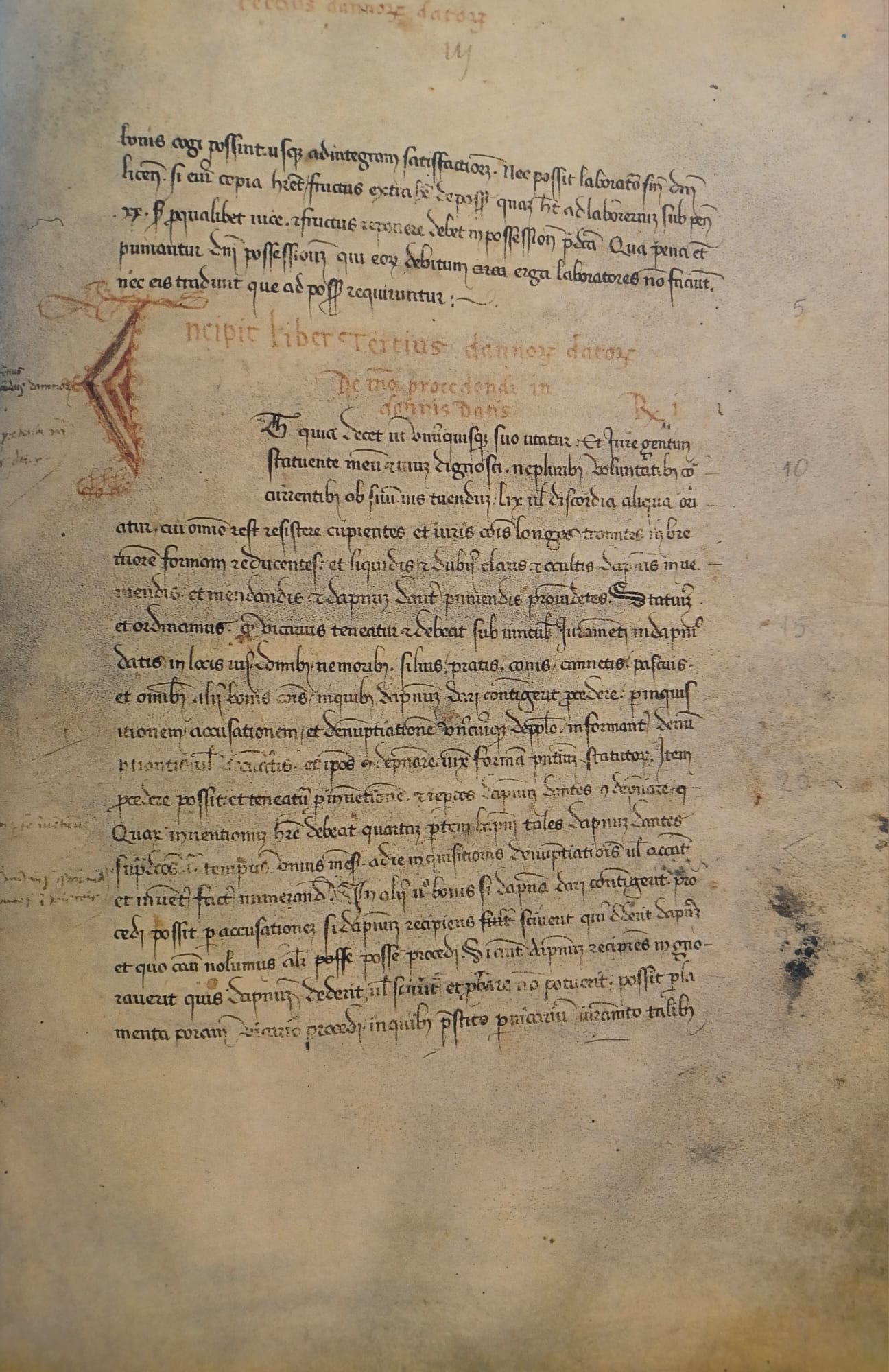
We are now in the center of the village in its most characteristic square. There is a curious crank fountain to remind us that in the past, when running water did not exist, people came here to fill jars and terracotta jugs. In addition to these daily activities, there were other ones, established by law, regulated and summarized in the Statute of San Vito sul Cesano. Rediscover and publish the Statutes of San Lorenzo in Campo and San Vito was a real fortune because it allowed inhabitants to reconstruct the life of the village, through a historical and philological investigation of the sources. The purpose of the Statutes was to ensure social peace and general well-being in San Vito sul Cesano and in San Lorenzo in Campo. Although similar, the two Statutes are obviously different as regards the specific regulations, above all those ones concerning the organization of the two villages. The Statutes contained rules governing the elections, duties, powers and salaries of people working in public offices. The statutes were applied in the so-called curia or district, and these were understood as the territorial areas of the relative jurisdictions. They included a central nucleus, consisting of the castle, surrounded by defensive structures such as walls, ditches, fences, hedges, and the surrounding countryside, in some cases subject to different treatment. The protection of collective interests and goods was also accompanied by that one of the territory and the properties of individuals, to ensure that everyone could enjoy the goods needed. The Statute of San Vito is integrated with successive provisions from 1443 to 1764 and composed of 5 books. The Statute of San Lorenzo in Campo had 4 books. This difference in numbers makes us understand that the life of San Vito sul Cesano, compared to the nearby San Lorenzo in Campo, had potentially more complex situations at a socio-economic level. These situations required specific laws in order to prevent damaging behaviours for the community. Despite this, today, the community of San Vito sul Cesano appears more compact than that one of San Lorenzo in Campo, perhaps due to the conformation of the castle itself and its greater closure to any external component. Communities such as San Vito sul Cesano were called “castellanze” and constituted an almost completely autonomous microcosm, very closed to any kind of external contributions. Here, life took place according to the immutable and slow rhythms of peasant civilization. Foreigners were treated with diffidence, kept under careful control and highly discriminated. The numerous fairs and markets were the only moments when these barriers to external reality fell or at least loosened.
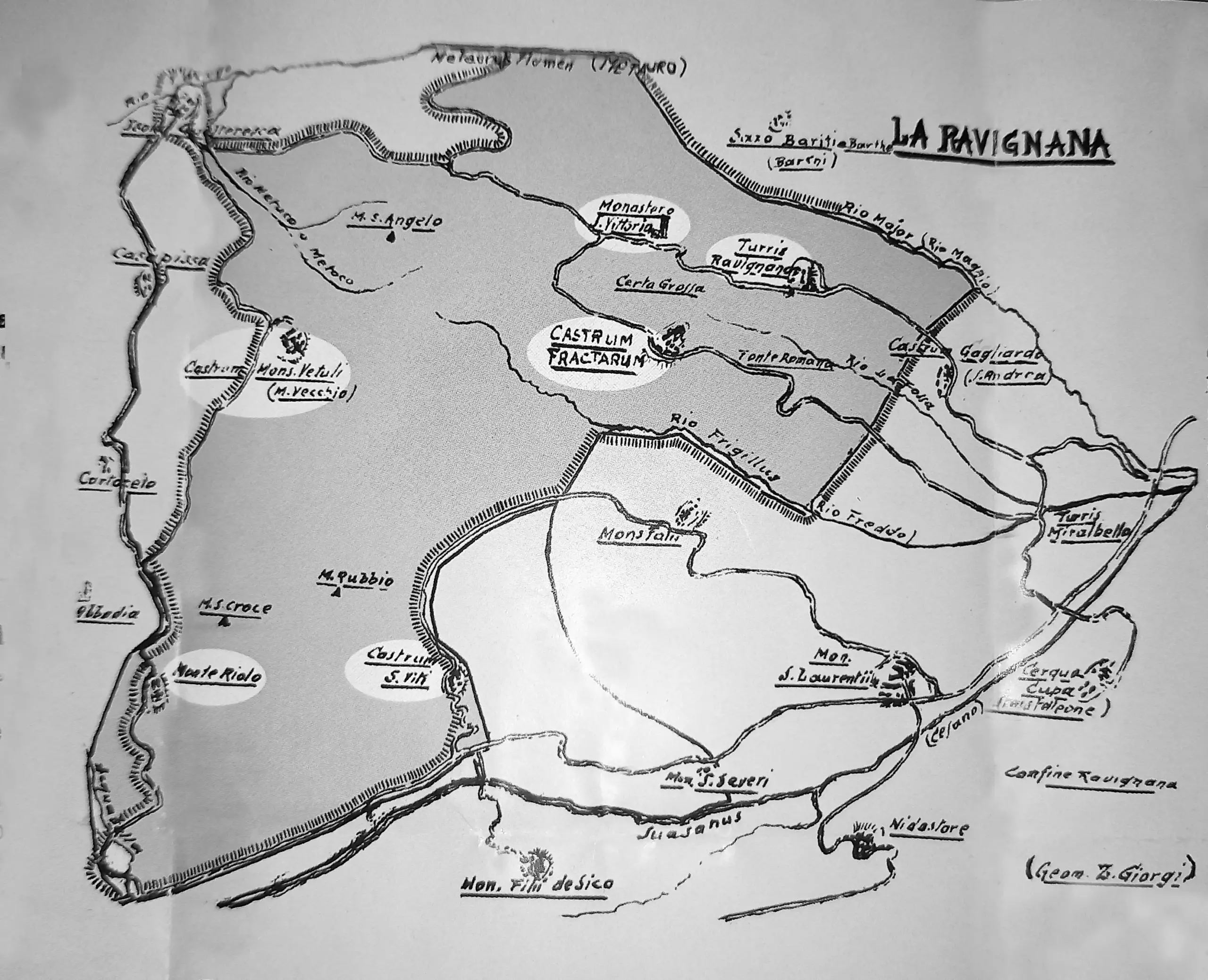
San Vito sul Cesano is also located in the center of the territory known as the Province of Ravignana or simply Ravignana. During the 9th-10th centuries, after the definitive fall of the Western Roman Empire, the Church of Ravenna, detached from the Church of Rome, became the Church of the new Germanic kingdoms, and its influence expanded throughout Italy. The Benedictine Monks of the Monastery of Classe in Ravenna, having received lands located in our valley as a gift from the Emperor and the Popes, decided to establish small monastic communities, which were followed by “castrums”, castles, and “castellanze”, giving life to many villages. Their territories were included between the Cesano river and the Tarugo stream; it constituted a fiefdom, and included seven communities: Fratte Rosa, first; Torre Ravignana (today Torre San Marco); Villa Certagrossi (no trace remains); Isola Gualtresca (today Isola di Fano); Montevecchio (district of Pergola); Monterolo (district of Pergola); San Vito sul Cesano. The Province of Ravignana (Little Ravenna), depended administratively, civilly and juridically on the Monastery of Classe in Ravenna, through the Monks of the Convent of Santa Vittoria. Each community had a church or an altar dedicated to the Saints of Ravenna.
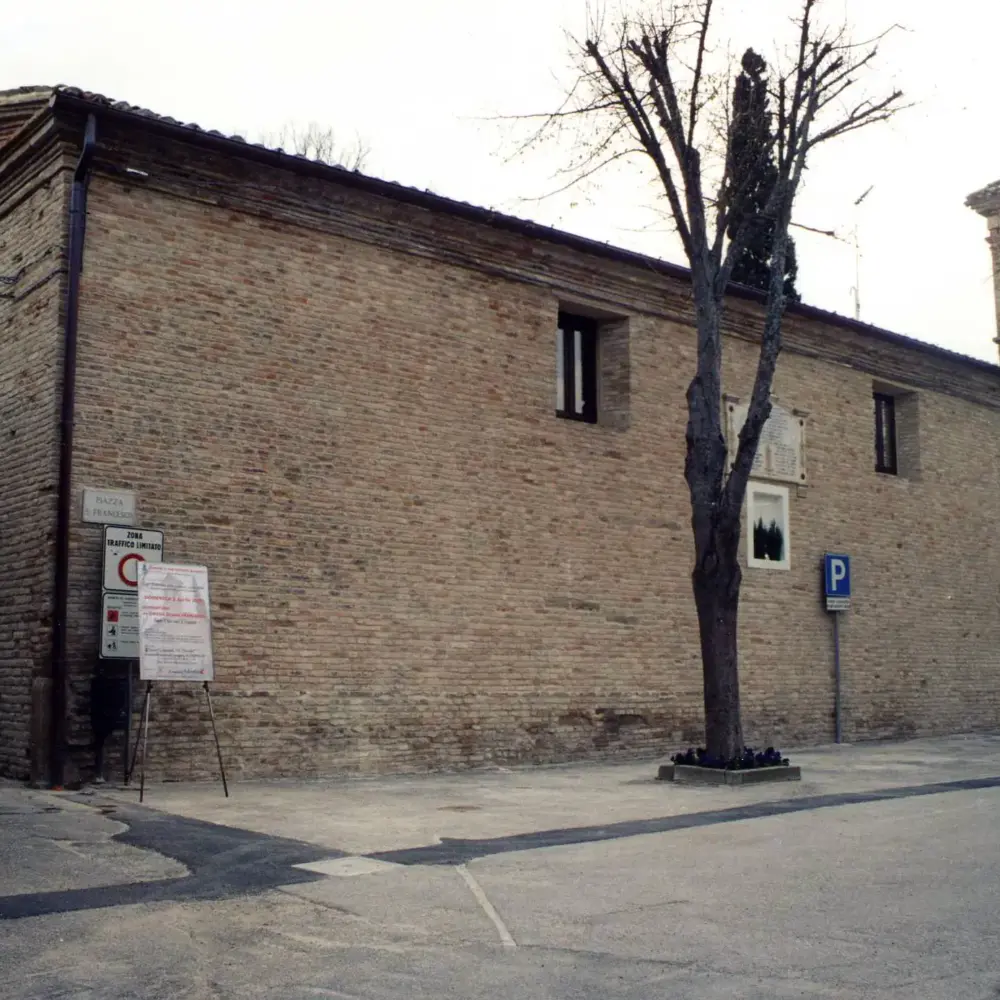
Point 11: sanctuary of Our Lady of Favors (Madonna delle Grazie)
The church is a brick building, and it is all that remains of the much larger and well-structured monastery of the past; it was definitively deconsecrated, approximately in the 1950s.
Go to point 11