

Point 11: Sanctuary of Our Lady of Favors (Madonna delle Grazie)
On 17 April 1037, the German emperor Conrad, granted Father Lamberto, abbot of the monastery of Sant’ Apollinare in Classe, privileges and confirmations on four monasteries, among which there was the Castle of San Vito, called in fact, originally, the temple of Sant’Apollinare.
Only the churches adjacent to the four monasteries remain.
Later, in 1407, Pandolfo III Malatesta, lord of Rimini and Fano, and of part of the Cesanense valley including San Vito sul Cesano, gave the monastery to the custody of Augustan Fathers of Pergola.
The devotion to Saint Monica, mother of Saint Augustine and dear to the Augustinians, dates back to that period. The first altar to the left of the entrance was dedicated to her and a confraternity with the same name was born.
In the following century, in the year 1580, the monastery passed to the Minor Conventuals Friars and the temple, despite being dedicated to San Francesco d’Assisi, took the name of “Sanctuary of our Lady of Favors”.
When in 1620, because of the decision of the General Chapter of the Minor Conventuals Friars, the monastery lost its autonomy and joined the convent of Pergola which was very flourishing and prestigious. In 1653, the seal of Pope Boniface X provided the closure of the few in number convents of each monastic order and for this reason the monastic family was dissolved.
However, the church remained officiated, the sacred functions and the inflow of local faithful and pilgrims, even from distant countries, continued.
Since its foundation, and during the following centuries, the temple has been receiving conspicuous donations and bequests from the noble families of the time, such as the rich Bonajuti, the Merlini, the Servici and others, on the occasion of festivities and celebrations of masses and funerals.
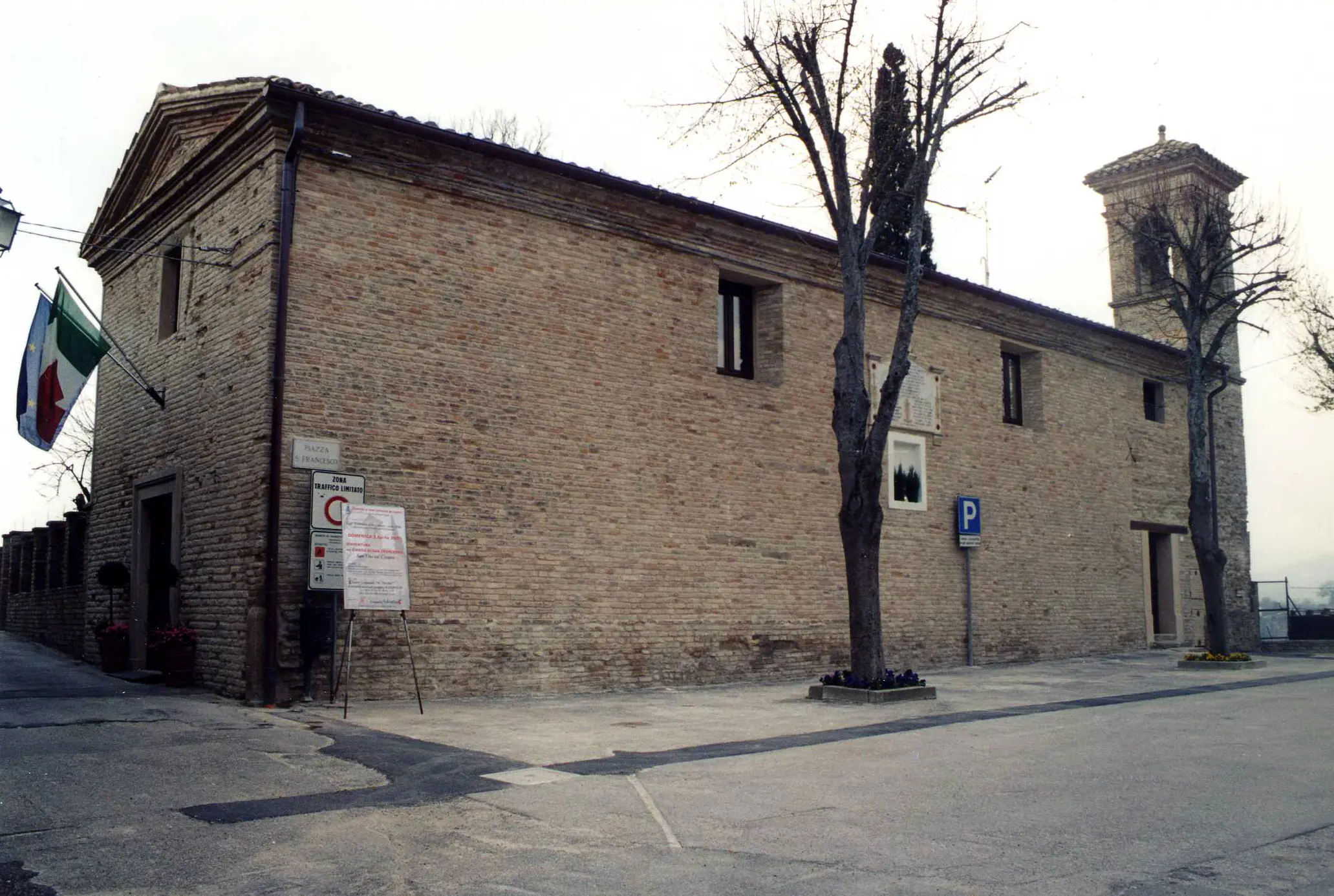
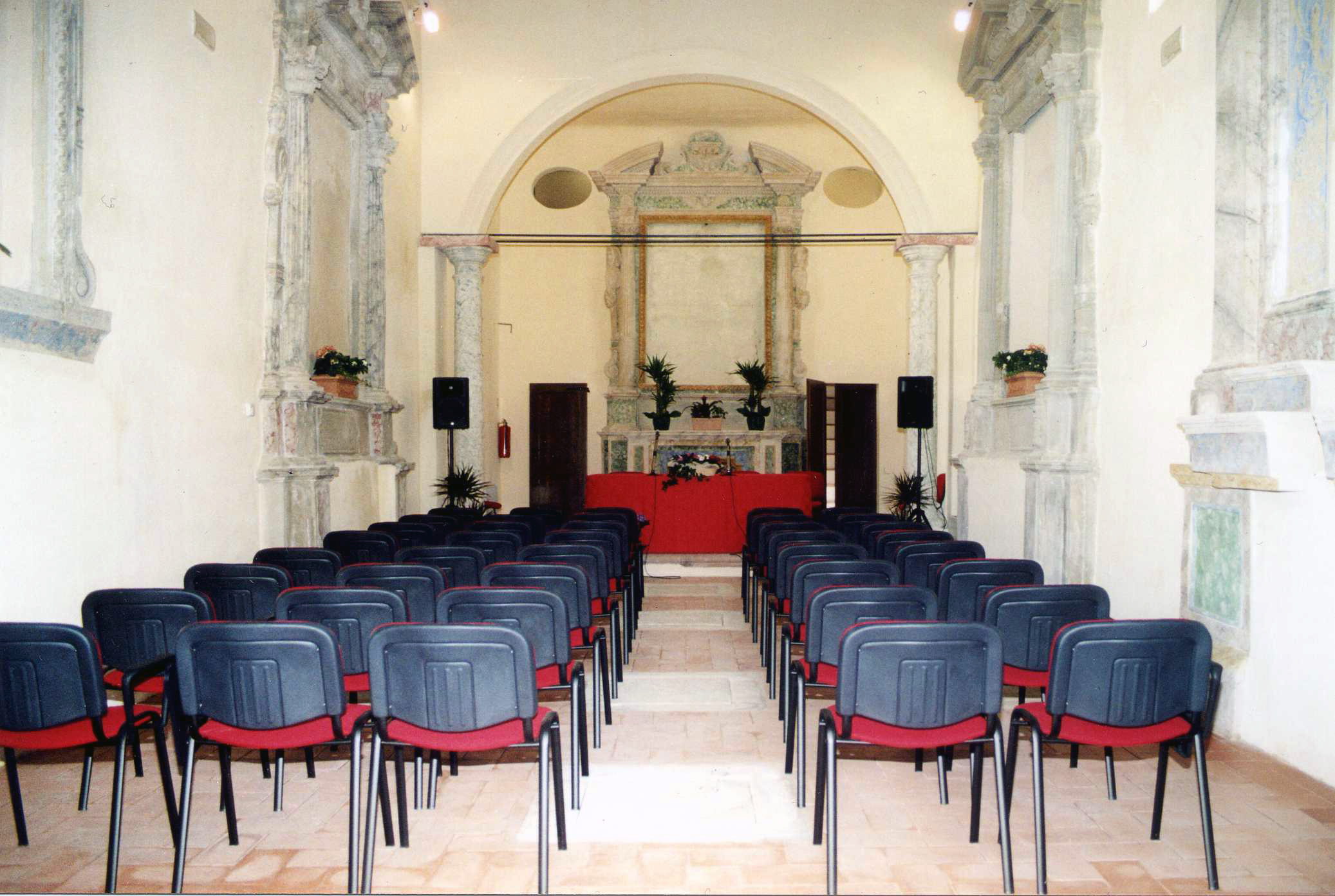
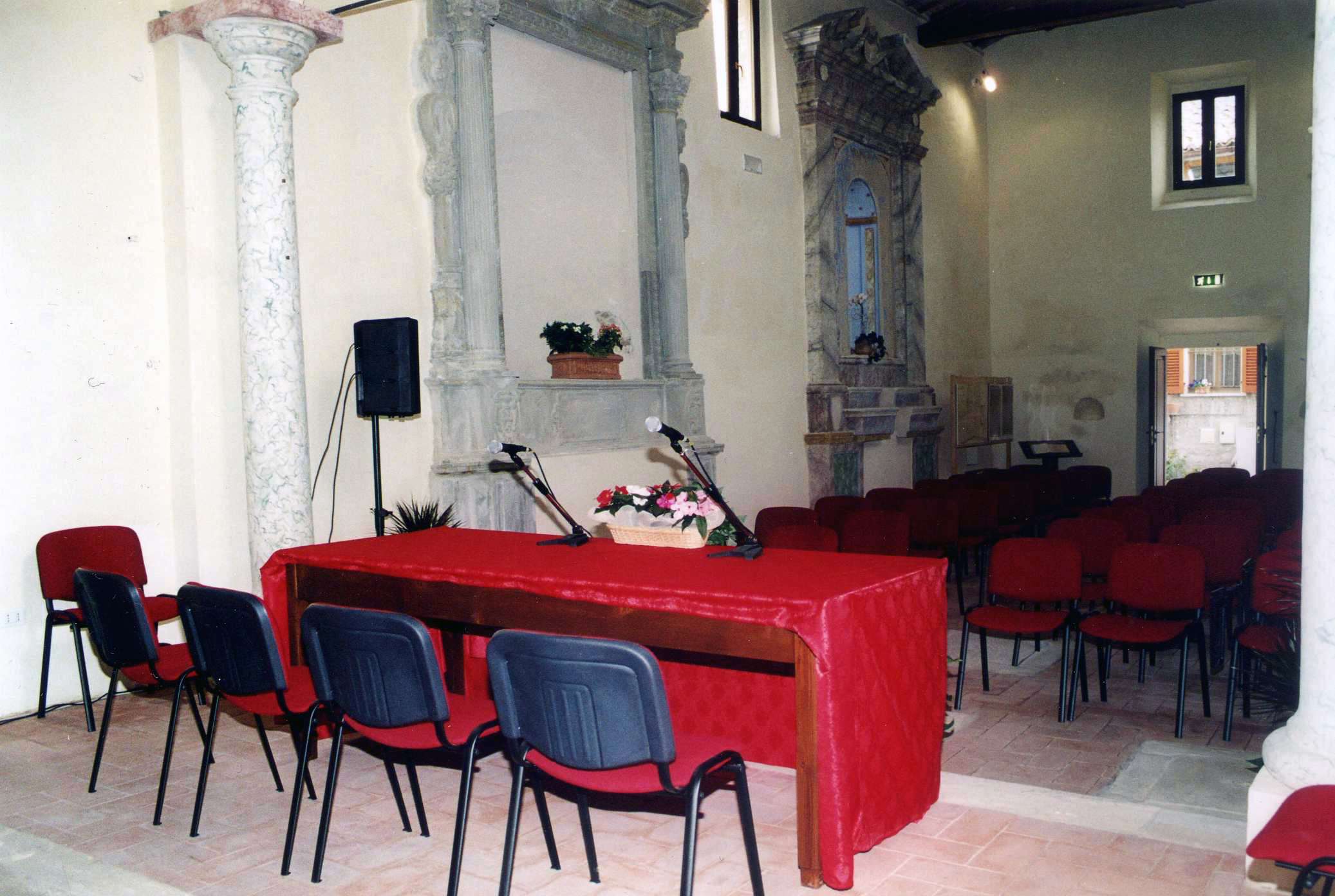
The church is a brick building, and it is all that remains of the much larger and well-structured monastery of the past; it was definitively deconsecrated, approximately in the 1950s.
Externally, the building has no ornamental elements, with the exception of a marble epigraph adorned with a laurel crown, on the wall towards the square, which was affixed in 1920 to commemorate the people from San Vito who fell in the First World War.
In the main facade there was probably a rose window, while the carved stone portal was removed in an unspecified period of history.
The church was subject to many renovations and it is therefore difficult to reconstruct its features, from its origins to the present day.
The interior has a single nave, with a rectangular apse separated from the nave by two side columns, and a circular vault.
The back sacristy allows access to the rectangular bell tower. After the renovation of the building in 2006, these spaces were destined to the local Circolo Acli.
Inside the church there are five artistic stone altars, one central and two on the side walls.
There are also epigraphs and inscriptions, referring to the noble families who were linked by devotion to the Church of San Francesco.
The well-made paintings, such as the Apparition of Christ to St. Francis, once placed inside the altars, are now kept in the sacristy of the Parish Church, where there are also some statues; one of them is the “Virgin Mary of the Rosary”, very dear to the people of San Vito and always venerated with affection.
The first altar to the left of the entrance, with the elaborate carved stone framing, ornaments and frames, is dedicated to Santa Monica, as stated by the inscription placed on the top.
Continuing, the second altar, in carved stone, with base and columns, caryatids and ornamental vaults, enclosed a painting depicting the Virgin Mary with Child, San Lorenzo Martyr and San Carlo Borromeo from 1631.
Unfortunately, the patrons’ coat of arms was stolen from the altar.
The first altar to the right of the entrance is dedicated to San Francesco from Paola (1416-1507).
It was erected in 1614 and inside the niche there is a stucco and papier-mâché statue of the saint, left in place because considered of little value.
The Saint is depicted standing, with a bushy beard, habit, belt and a stick with his symbol on the top: the sun and its rays.
In San Vito sul Cesano there was a confraternity dedicated to him, and the devotion of San Vito population to the thaumaturge Saint has always been remarkable.
Also the second altar on the right side is in carved stone and has broken vaults, external caryatids and an empty frame.
The High Altar, on the other hand, in sculpted stone and with an empty Baroque frame, has a stone and bricks table, with an empty urn where the relics or the body of some Saint were kept in the past.
At the top there is the dedication to God, Excellent, Maximum and the indication “Privileged Altar”.
Point 12: typical products and contacts
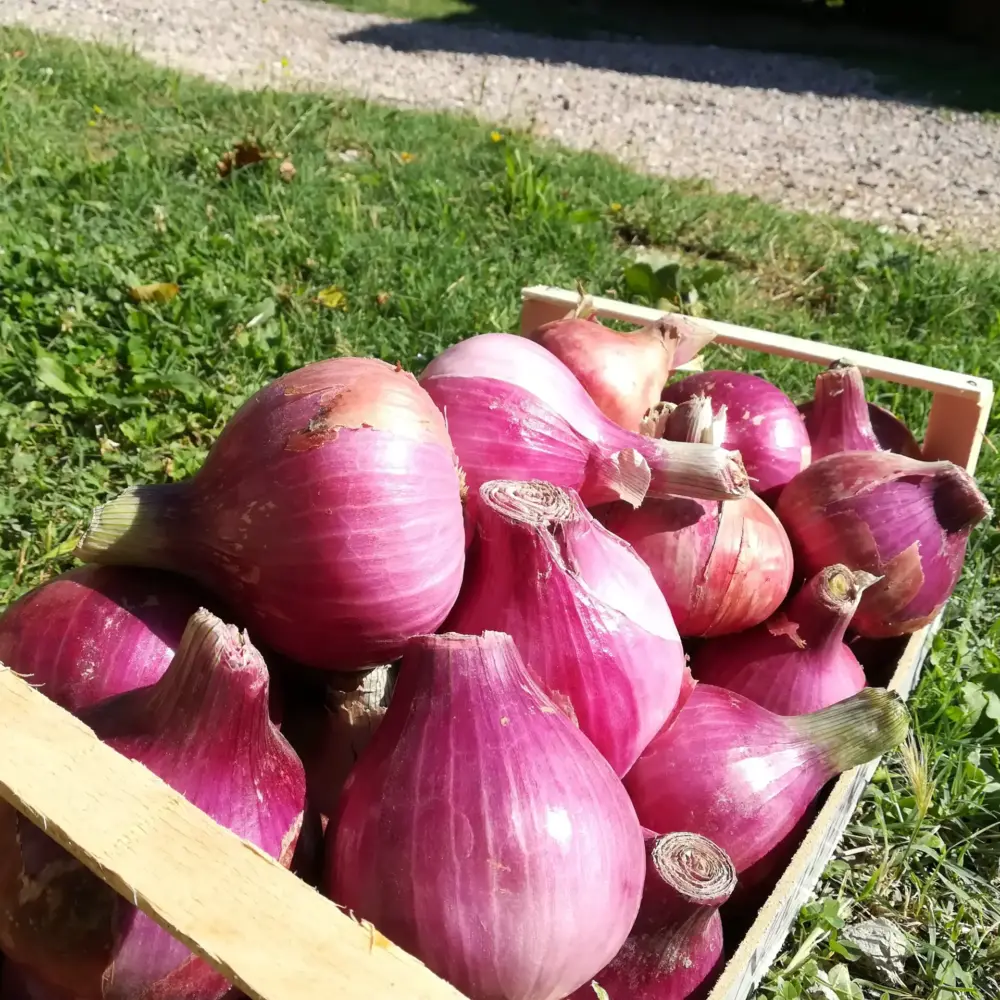
We have reached the end of this tour of San Vito, we hope you enjoyed and appreciated it. Before leaving we would like to remind you that our hills provide many typical products, strongly linked to the territory where they are grow. Their high quality is the result of the passion of people who produce them.
Go to point 12