

Point 1: Church of Old Pieve
Welcome to the Pieve of San Vito sul Cesano.
The San Vito Giovani Association in collaboration with the Municipality of San Lorenzo in Campo and with the Parish created the “San Vito Tour” project.
From here you can start the green route that will lead you to the Castle of San Vito along the old road where you will find two other points that you can listen to by scanning the QR codes along the route. Once you reach San Vito and precisely San Francesco Square, you can continue with the yellow route along the narrow streets of the village.
The Old Pieve is in a place inhabited since prehistoric times by nomadic tribes and stone age shepherds. Umbrians, Etruscans, Celts or Gauls Sénoni and finally Romans chose to live in these fertile lands along the Cesano river. Here there was a Roman “vicus”, that is. a group of houses and land without any civil right, such as the “municipium” or the Roman colony. Nevertheless it had its own identity and a precise name, usually linked to its characteristics, inhabitants or to the jobs.
Although it was very close to the flourishing Roman city of Suasa, it was not really part of it. Despite the numerous finds of ancient artifacts, buildings, sewers, tombs, remains of aqueducts, coins, vases, etc. no inscription revealing the name of this ancient village has ever been found.
In 1642-43 the Dominican father Vincenzo Cimarelli wrote in his book “Istorie dello Stato d’Urbino” that he had visited the ruins of this centre. Then, Ludovico Antonio Muratori (1672-1750) reports an ancient inscription from this place. This epigraph, dating back to the 4th century A.D., is dedicated to two Christian brothers, M. Valerius Florentis and M. Valerius Herodius, and reports the military positions they held. Unfortunately, also in this case, the name of the place where it was built is not indicated, and due to lack of systematic excavations, it has not been possible to identify the necropolis it belongs to. The epigraphic monument is now kept in the National Gallery in Urbino. The mystery of the name remains unsolved!
In 410 A.D. the barbarian hordes of Alaric king of the Goths invaded the valley and destroyed Suasa. The smaller villages were looted. This Roman vicus was destroyed and abandoned after the invasion of the barbarians. The surviving population, looking for a safer and more easily defensible place, took refuge on the hill above. The castle was therefore built in a strategic position and with a view over the whole valley.
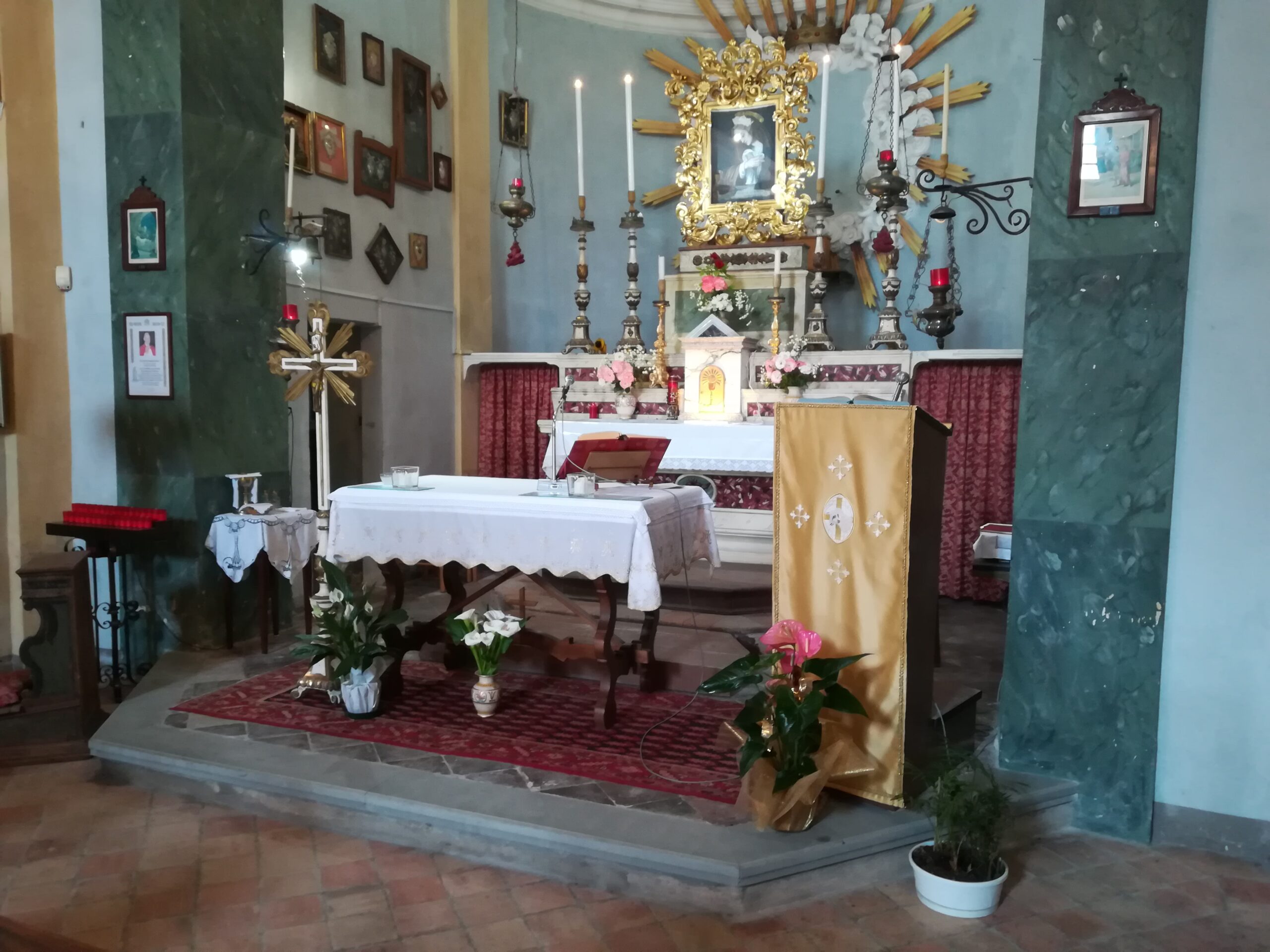
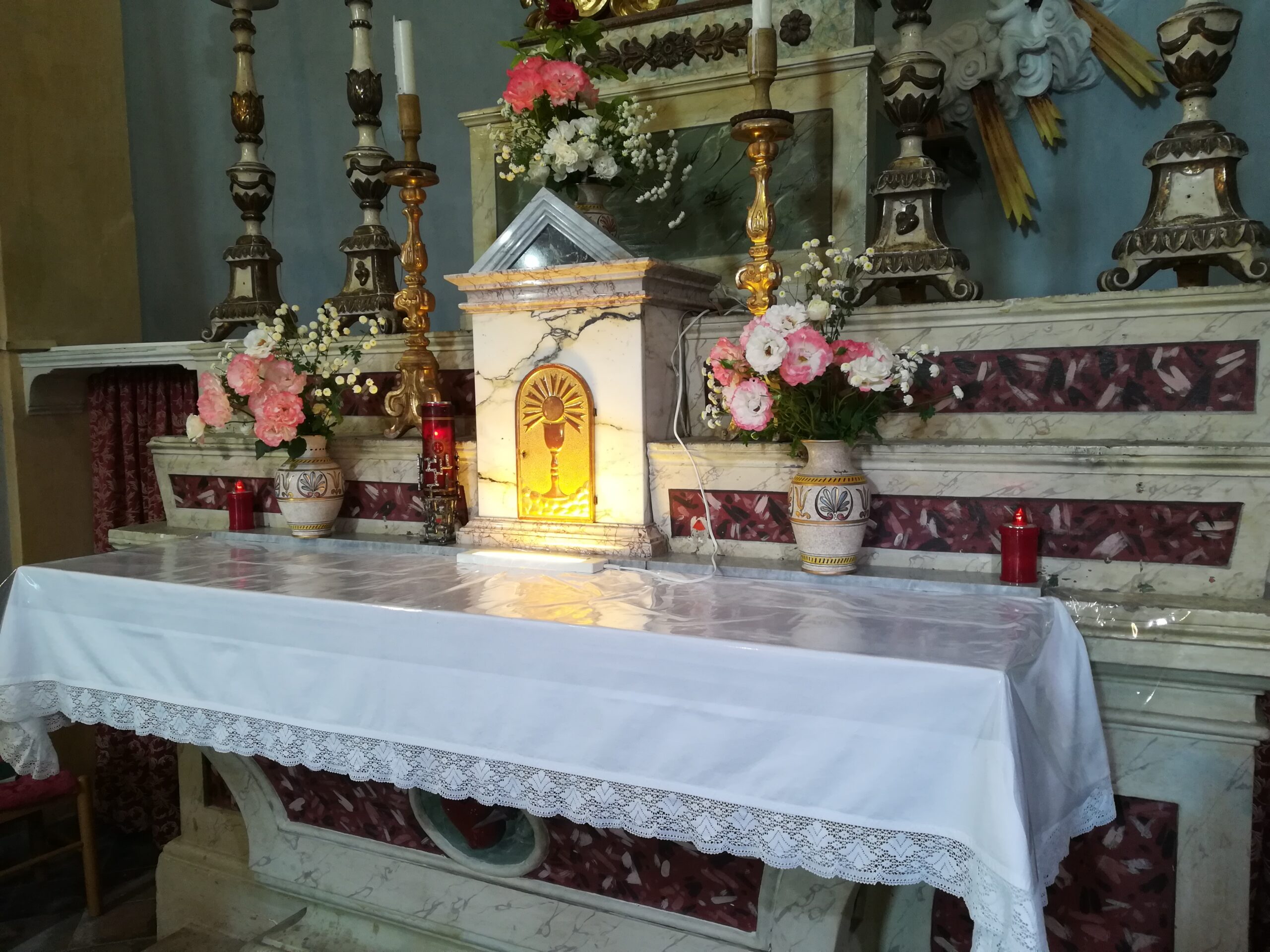
This church, simply called Pieve, gives its name to the whole surrounding area. Despite having lost the ancient glories of its origins, it still retains its charm.
The first written reference, although indirect, dates back to the year 945 A.D. It is defined as a “cenobio”, that is a community of religious people, as shown by the “Annales Camaldulenses Ordinis Sancti Benedicti” within the possessions of the monastery of S. Apollinare in Classe in Ravenna. In 1037, the diploma of the emperor Corrado II, made explicit reference to the possessions of San Vito by the Ravenna monks. Of the aforesaid monastic complex, only the church dedicated to S. Vito remains and the rectory is now a private residence.
The layout of the original building was in Romanesque style, but today it is hard to find its distinctive features because of the numerous transformations over the centuries. It has also suffered numerous wars with consequent destruction and the frequent earthquakes that have affected our Cesano Valley. On June 3rd 1781, the disastrous earthquake in the Marche Apennines caused the collapse of the ceiling of the Old Pieve. As we see it now, it is the result of the reconstruction done in the 1800s.
The 19 “tiles” into the facade at the entrance door, arranged in a harmonious and symmetrical way, remind us of the glories of the past. These are decorative fragments, dated back to different eras and construction phases, decorated with plant motifs, such as acanthus branches, and fantastic animals, typical of the Romanesque repertoire, datable between the VIII and IX centuries. The mythical creatures depicted in the tiles are the representation of Evil, but all dragons, griffins, basilisks, snakes and double-tailed sirens have a collar around their necks, meaning that the forces of Evil are enslaved and controlled by the power of Good and Rationality. Some of them were made by the same artist who decorated the Basilica of San Lorenzo in Campo and the church of San Sebastiano in Bellocchi in Fano. Four of them have already been stolen and only the recess in the wall remains, while all the others are rapidly deteriorating as they are made almost entirely of gray sandstone.
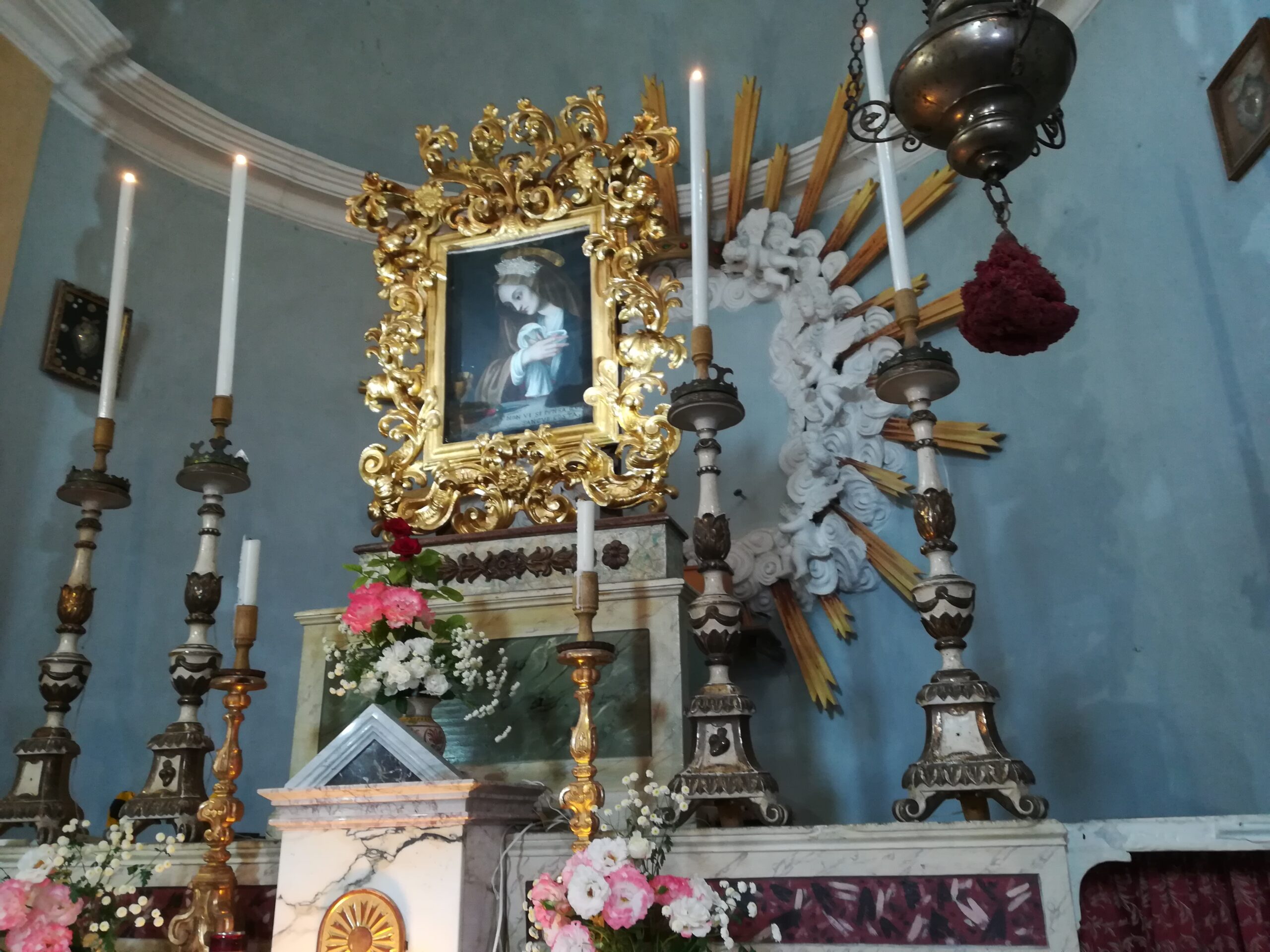
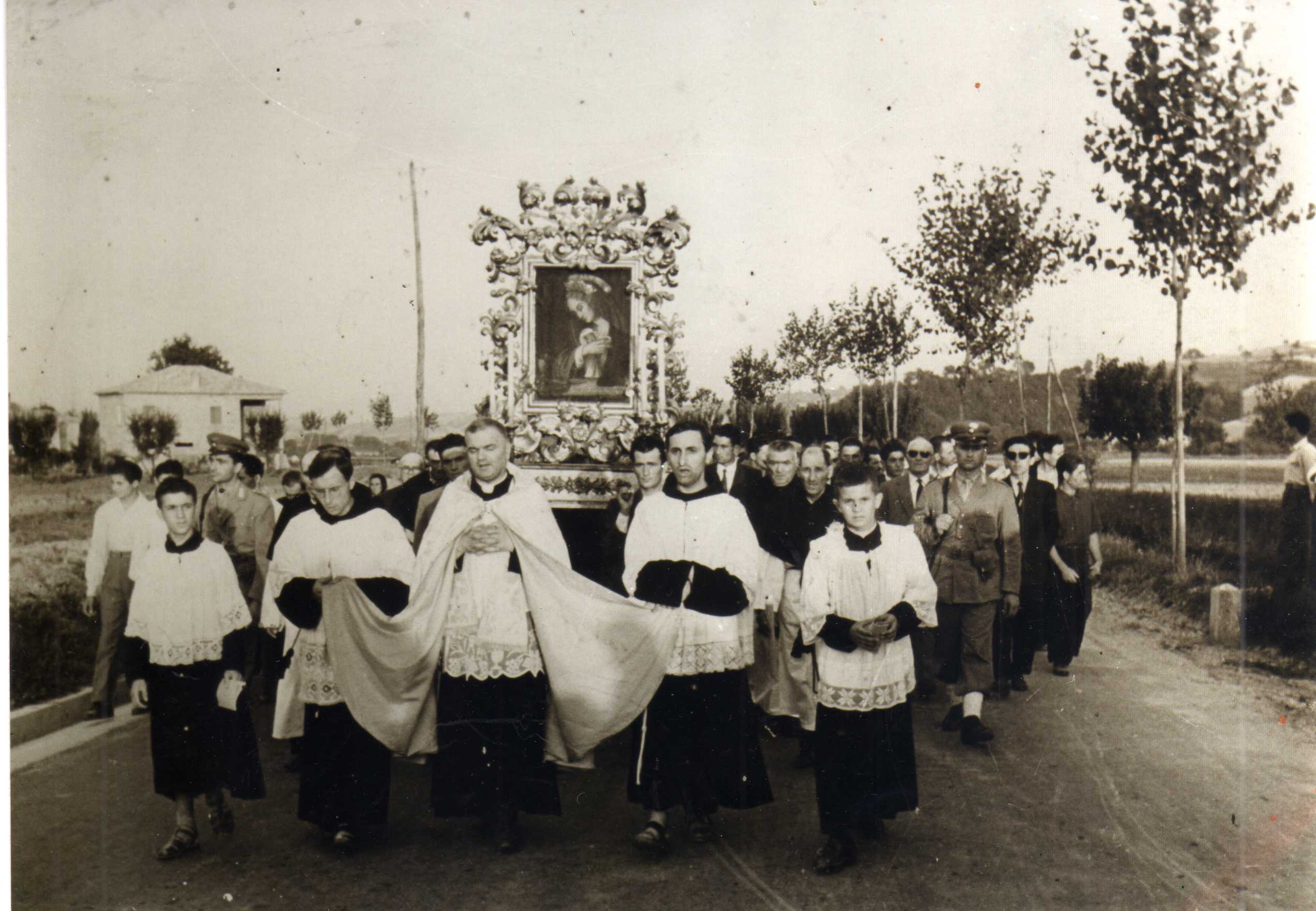
Inside the church, with a single nave, there is the commonly called “Addolorata”, an object of worship and symbol of the Pieve itself. It is a painting of the “Our Lady of Sorrows” absorbed in contemplation of the symbols of the passion of her Son Christ, depicted in the lower part: the crown of thorns, the tip of the bloody spear and a goblet with three huge nails. Finally there is the suggestive inscription “You don’t think about how much blood it costs” (Non vi si pensa quanto sangue costa). This particular iconography has a Spanish origin and is widespread throughout Italy. Probably this copy is from 1800s, but its author remains unknown.
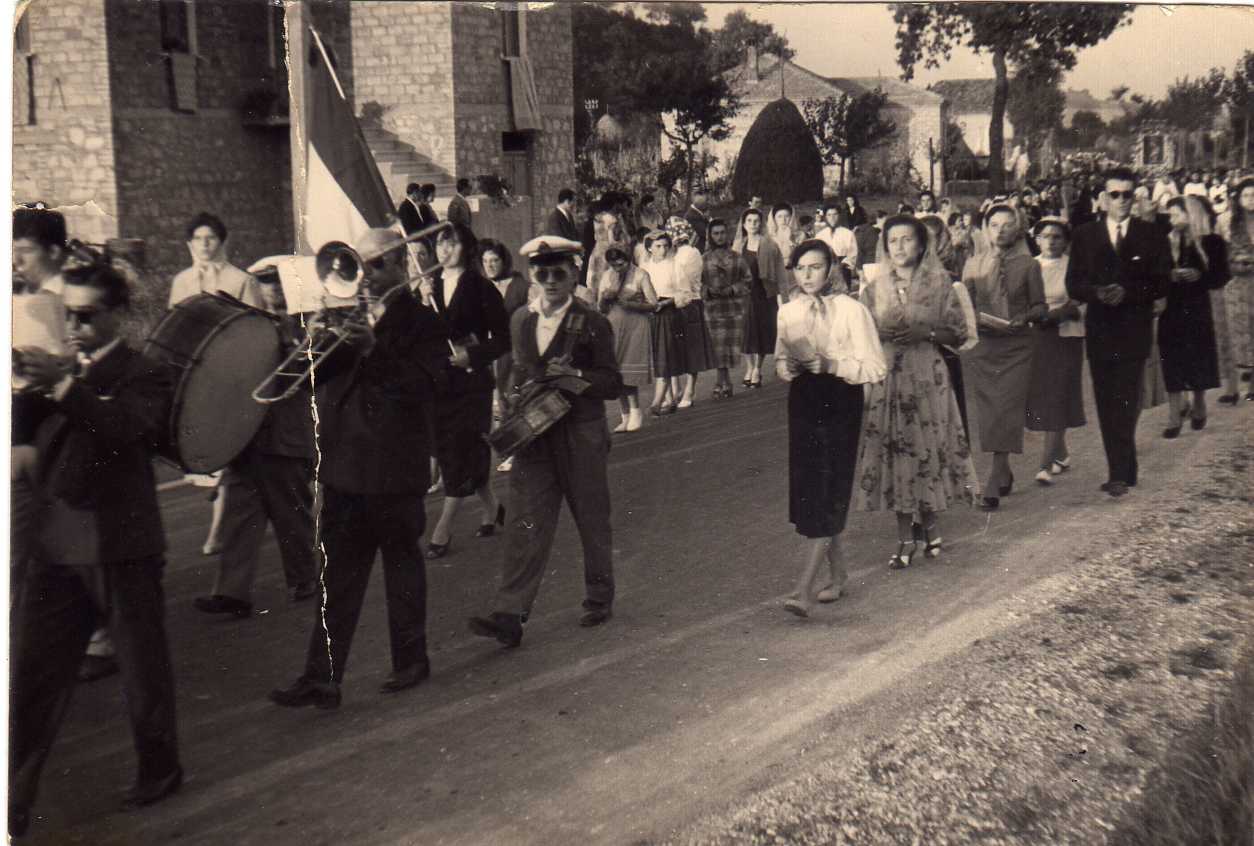
The celebration of the “Our Lady of Sorrows” has been taking place for a very long time, always on the third Sunday of September. It has an ancient and genuine flavor, very participated and felt by the inhabitants of San Vito, during which the image of the “Addolorata” is carried in procession through the surrounding streets. It is organized by the ancient “Confraternity of Our Lady of Sorrows of the Old Pieve” which lovingly takes care of this little church, does charitable works and passes on the devotion to next generations.
Continuing along the road climbing up from the Pieve to the Castle of San Vito, you will find post number 2.
Point 2: The Necropolis and the ``Caselle``
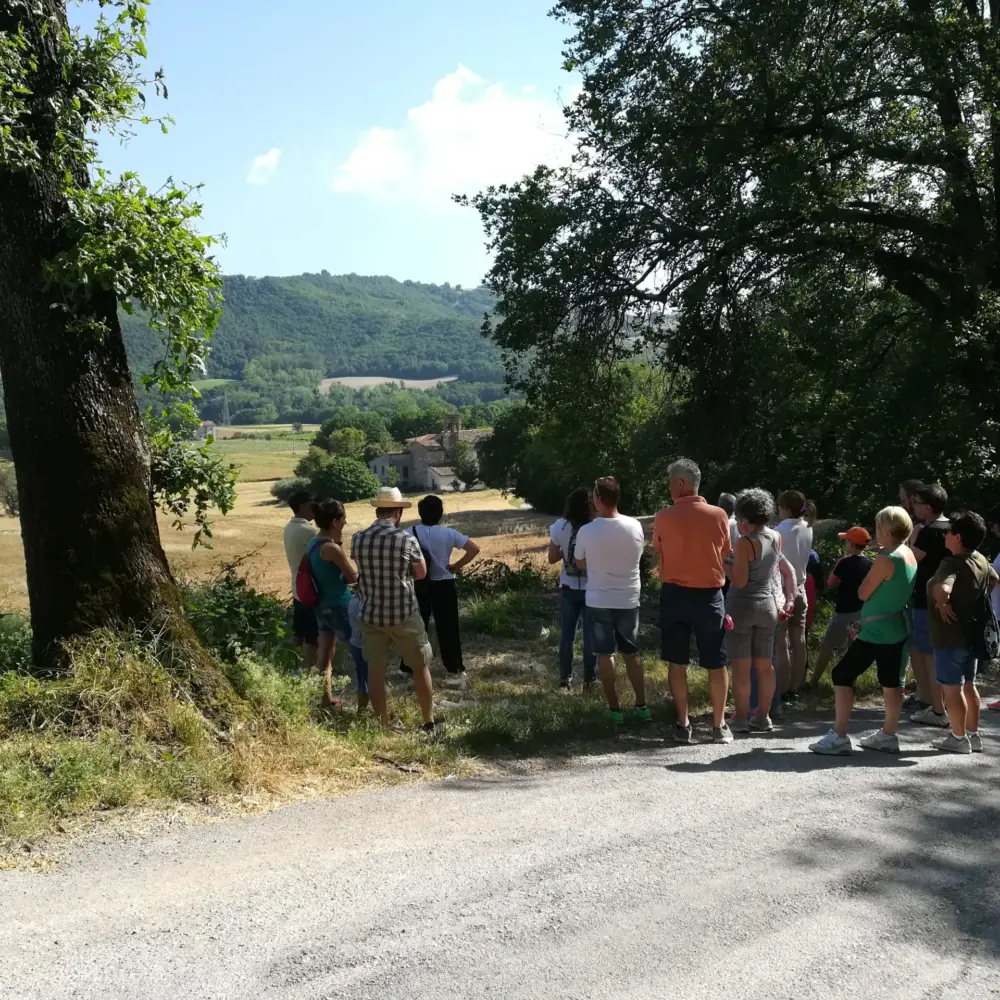
Welcome to point 2. Take a moment to rest after climbing this steep hill and take the opportunity to learn about two more important historical facts about San Vito sul Cesano and its surroundings.
Go to Point 2